
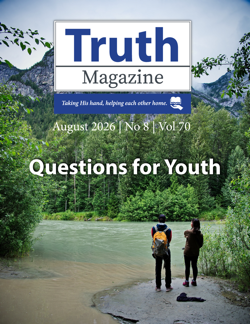
Editorial: Thou Troubler of Israel, by Mark Mayberry
Faithful servants are often falsely blamed for trouble caused by sinners, and Scripture shows that the true troubler is the one who rejects God rather than the one who proclaims His truth.
Meditations: The Use of Ekklēsia in the Greek Old Testament, by Kyle Pope
The use of ekklēsia in the Septuagint shows that the word carried the idea of God’s covenant assembly long before its New Testament use of the church.
Women’s Insights: Show Some Respect, by Diana Dow
Parents teach respect by training children to value possessions, honor others, and submit to authority, thereby preparing them for godly and responsible living.
To the Praise of His Glory: Living by Faith in a Skeptical World, by Bruce Reeves
Christians must meet skepticism with reasoned faith grounded in God’s word, engaging others with courage, wisdom, and Christlike conduct.
Bible Patterns: The Pattern of Conversion, by Shawn Chancellor
The New Testament reveals a consistent pattern of conversion in which sinners hear the gospel, believe, repent, confess Christ, and are baptized.
Questions and Answers, by Bobby L. Graham
The author argues that Jesus used unleavened bread when instituting the Lord’s Supper and that Christians should follow the pattern established by Christ and His apostles.
Archaeology: The Shephelah, by Barry Britnell
The Shephelah’s geography helps explain several biblical events, including David’s victory over Goliath and the return of the Ark of the Covenant.
Early Morning Musings: Explanation and Application of Bible Texts, by David Weaks
These brief studies apply biblical teaching to suffering, spiritual death, the power of truth, and personal responsibility for sin.
Expositions: Do Not Be Taken Captive by False Teaching, by Danny Linden
Colossians 2 teaches that Christ is fully sufficient for salvation and that human additions, philosophies, and self-made religion cannot save or transform.
Questions for Youth #1: What Is Truth? by Eli Henley
Truth is objective, absolute, and defined by God, so Christians must submit to God’s revealed word rather than reshaping truth to fit personal desires.
Questions for Youth #2: What About Betting? by Jared Edwards
Betting conflicts with biblical principles of contentment, stewardship, diligent labor, and freedom from covetousness.
Questions for Youth #3: What About Dancing? by Titus Davis
While Scripture does not condemn every form of dancing, modern social dancing often promotes sensuality and should be avoided by Christians pursuing holiness.
Questions for Youth #4: What About Intoxicants? by Nicolas Edwards
Because intoxicants impair judgment, weaken self-control, harm the body, and endanger the soul, Christians should abstain from them completely.
Questions for Youth #5: What About Pornography? by Quaid Huddlestun
Pornography perverts God’s design for sexual fulfillment, corrupts the heart, enslaves the mind, and must be rejected in pursuit of purity.
Questions for Youth #6: What About Social Media? by Eli Dalton
Social media can be useful for communication and encouragement, but Christians must use it with wisdom because it affects influence, priorities, and spiritual purity.
Questions for Youth #7: What About Vaping? by Ben Mayberry
Vaping is harmful, addictive, wasteful, and inconsistent with biblical stewardship, purity, and a godly influence before others.